
Answers to the Most Common Questions About How to Wash and Fade Raw Denim Jeans
The world of raw denim spins on an axis of fades. We all want them, and we all want to make sure that we’re doing the right things to bring our denim’s beautiful inner qualities to the surface.
But fading raw denim is a long game. You spend months breaking in your jeans, waiting for those whiskers and honeycombs to show up—and the last thing you want is to ruin it all with the wrong wash.
That’s why questions about fading and washing are so common (and worth getting right). This guide answers seven of the biggest ones.
You’ll learn how long fades really take, what happens if you never wash, how to shrink your jeans (if you must), and when it’s finally time to give them a soak. We’ll also cover why some guys wash more often—and how that changes the results. But first …
TELLASON PROMO
Tellason for Fall — and Far Beyond
If you’re a fan of slow-made, quality menswear with real character, Tellason should already be on your radar. Below are three standout pieces from their current lineup—classics with modern character.
Fredy Loose Fit
A new fit from Tellason. Wide leg, high rise, and raw denim with real fade potential.


TL;DR — Quick Summary
Fading and washing raw denim takes time—and the right choices. Here’s what to know:
- Fades appear after months of wear. Faster lifestyle = faster fades.
- Heavyweight denim takes longer to show fades, but rewards patience.
- Less washing = higher contrast—but more risk of crotch blowouts and broken creases.
- First soak matters. Most raw denim isn’t truly raw—but if it’s unsanforized, it must be soaked.
- Frequent washing produces vintage-style fades. Delayed washing creates sharper contrasts.
- Always wash inside out to avoid vertical crease lines.
- Shrinking jeans in the wash works best with unsanforized denim—but sizing mistakes rarely shrink into perfection.
This FAQ isn’t a deep dive into technique. For full step-by-step guides, check out:
👉 How to Wash Raw Denim (and Every Other Kind of Jeans)
👉 How to Hand Wash Raw Denim Jeans (The Right Way)
But if you’re after smart, straightforward answers that help you fade better and wash without regret—this is the place to start.
FAQ #1: How Long Does It Take to Fade Raw Denim?
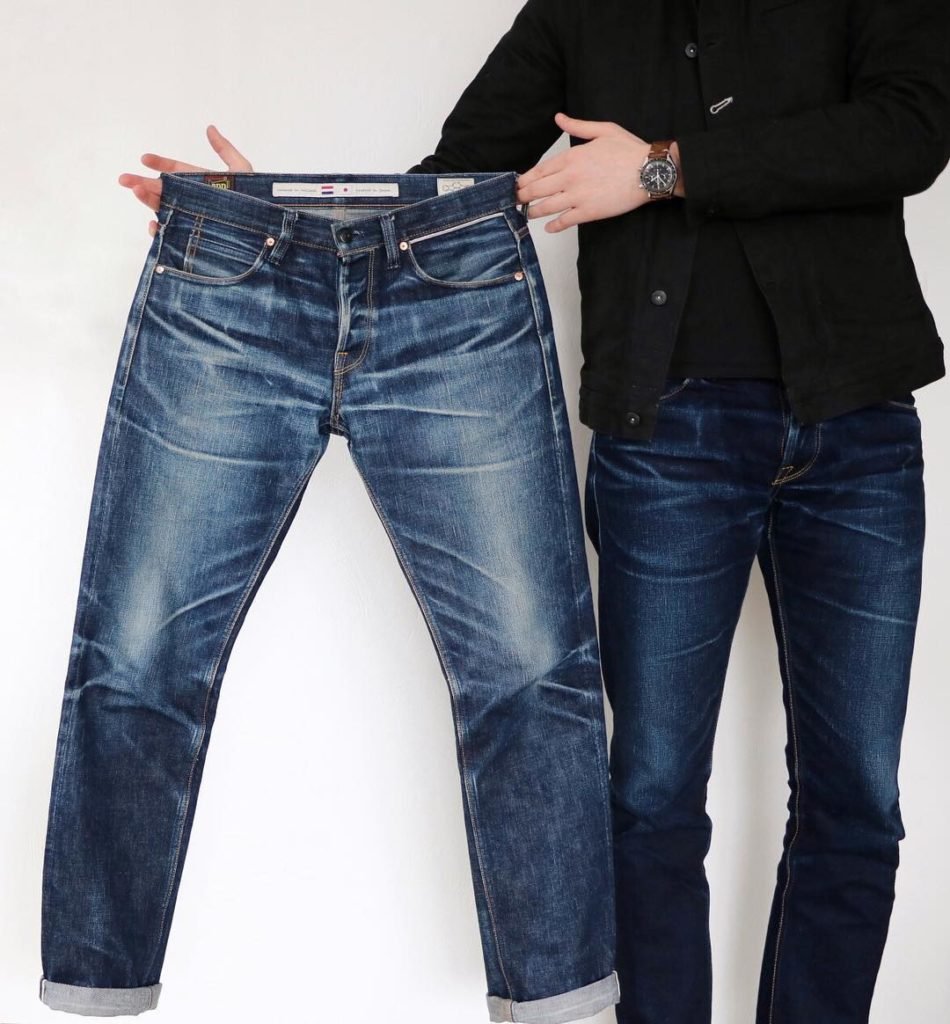
Answer: It depends on your lifestyle, how often you wear them, and the denim’s weight. Faster wear = faster fades.
One of the things that draws so many of us to raw denim is its ability to tell a visual story about us. Our lifestyle gets imprinted on what we wear. All else being equal, the faster we live, the faster we fade. Want sick fades? You’re going to have to work for them.
With a vigorous lifestyle, you can expect to see fades emerging in three to four months. If your lifestyle is more laid back, you’ll have to wait a little longer than this.
Pro tip: Heavyweight denim takes longer to fade—but the results can be spectacular. Just expect to wait at least a year for truly dramatic contrasts.
If you’re a nine-to-fiver who only gets to wear your denim in the evening and on weekends, you’ve got an uphill climb ahead of you. If you make the absolute most of your available denim-wearing time (and if you’re somewhere in the middle of the denim weight scale), you might see impressive fades starting to develop within eight to twelve months.
There are plenty of faders who only wear their jeans part time and still manage to produce beautiful fades. They make up for their time away from their denim by wrench monkeying in the garage or climbing mountains in every moment of their spare time. They know that great fades won’t come to us. We’ve got to chase them.
Remember, most dedicated faders wear the same pair every day without fail for months (or even years) on end. If you want fades and want them now, live loud and live in one pair.
Related: How to Wash Raw Denim (and Every Other Kind of Jeans)
FAQ #2: How Can I Accelerate the Fade Process?
Answer: You can’t—not without cheating. And if you cheat, the fades don’t mean anything.
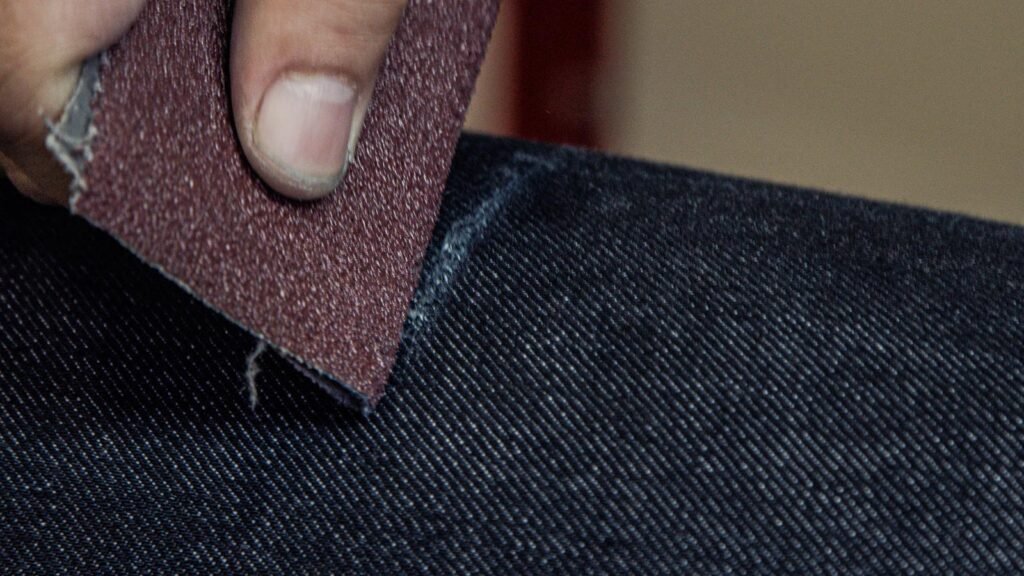
You can go to town on your denim with a scouring pad, sandpaper, or chemical agents. The result might be a pair that looks the part, but you’ve missed the point in a big way.
Raw denim, as a culture, is a movement away from artificial, store-bought fades and towards authentic, personal ones.
There’s a very small corner of the raw denim scene where people cut holes in their raws or use caustic chemicals to accelerate the fade process. In this corner (noses to the wall) is where they belong. This is unconscionable.
The only fades worth being truly proud of are the ones we’ve earned with blood, sweat, and gears. Don’t cheat.
Related: Raw Denim Myths (and Why They’re Wrong)
Psst … Did you see I launched a brand?!
Hey, it’s Thomas here. I’m the founder of Denimhunters, and I’ve started my own brand. It’s called Weirloom—a play on “wearable heirloom”—because my goal is to make stuff that’s so good you’ll want to hand it down to your kids.


It starts with the WL-001 jeans. They’re made in Europe from Italian selvedge—designed to be worn, kept, and loved for decades.
FAQ #3: When Should I Wash My Raw Denim?
Answer: When they’re dirty—or when they stop being enjoyable to wear.
This is probably the second-most frequently asked question in denim circles (coming in just behind ‘what is the best brand?’). And you’ll find a lot of conflicting advice out there.
Standard practice for years was to wait six months to wash your raw denim jeans. But the dissenting voices have grown louder and more insistent over the past few years.
Pre-soaking and regular washing are now standard practice (and we advocate both), but this will, we know, produce howls of outrage from the minority.
We want to get out in front of this by washing away a few of the misconceptions surrounding washing or not washing raw denim:
1) Most raw denim isn’t truly ‘raw’
First of all, it is highly unlikely that your raw denim is truly raw (i.e., completely dry). 99% of denim (yes, including raw denim) comes to you treated in a process that uses either water or steam.
Unless it says ‘loomstate,’ ‘unsanforized,’ or ‘shrink to fit’ on the tag, your raw denim has already been wet.
2) Less washing = more holes
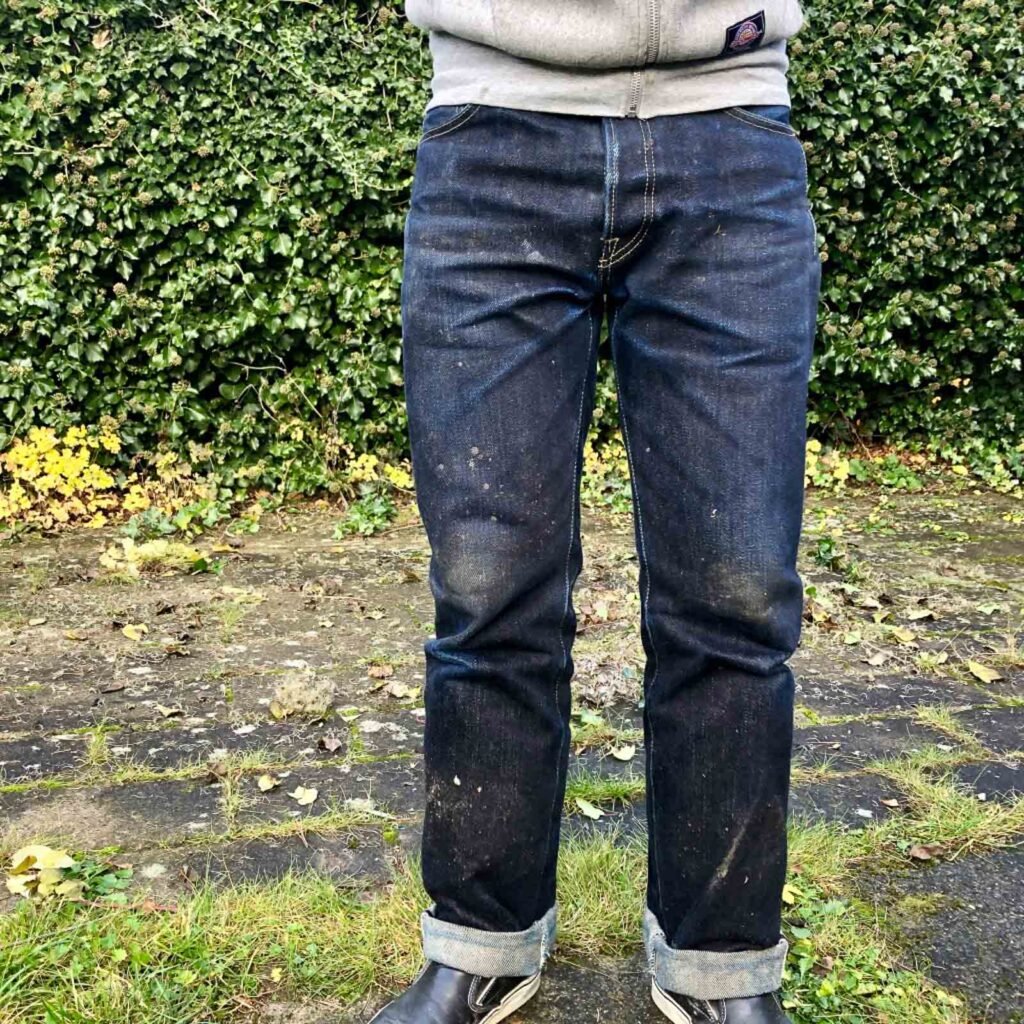
Second, beautiful fades are not the inevitable result when we hold off on washing our jeans for months and months. What is the inevitable result of this practice is jeans that break down prematurely.
Crotch blowouts and scar-like whiskers and honeycombs mean that you’ll need to repair your denim earlier, and you’re racing headlong towards that day when your denim is no longer wearable.

At the end of the day, it comes down to your fade philosophy. If sharp high-contrast fades are your primary goal (or your only goal), by all means keep your jeans dry. You’ll probably be forced to repair your denim considerably earlier than you would have otherwise, but for some people, this is a fair exchange.
If you want to balance longevity and fades, a washing regimen will help you find that balance. We start each pair with an hour-long soak in luke-warm water.
I still get blowouts, but I get them much later in the game than when I kept my jeans dry for the first six months.
Thomas Stege Bojer
After your first soak, you should wash your jeans whenever they are no longer enjoyable to wear. This extends to the people you share space with.
If you get complaints about the stench, wash your jeans. If you leave greasy stains or brown streaks on the furniture, wash them. If they look dirty but don’t stink, you can probably let it ride a little longer.

FAQ #4: Will Washing My Raw Denim Often Accelerate the Fades?
Short answer: Yes—but not in the way you probably want. Frequent washing removes indigo, but evenly. That means less contrast and more vintage-style fades.
Yes and no. Each time you wash your raw denim, you’ll be losing some of the indigo. So yes, each wash will fade your denim. However, the indigo loss will be uniform.
Think of each wash as an all-over fade. If you want sharper honeycombs and whiskers, frequent washing will be moving you in the wrong direction. If you want vintage fades (that more uniform washed out denim look), washing frequently is how you’ll get there.
Once again, it’s about striking the balance between extremely crisp fade patterns and clean jeans. If you care more about keeping your jeans dark and your fades crisp, you’ll have to sacrifice cleanliness and longevity.
I wash my jeans once every two months or so (more in the summer when my hands and jeans both get filthy).
Bryan Szabo
👉 Want to balance fades and longevity? Read How to Wash Raw Denim (and Every Other Kind of Jeans)
👉 See the gentlest method: How to Hand Wash Jeans
FAQ #5: How Should I Wash My Raw Denim?
Short answer: Always wash inside out—by hand if possible. Avoid spin cycles and tumble drying if you want to preserve colour and avoid creases.
Whether you’re washing by machine or washing by hand, always wash your denim inside out! Always!
This helps minimise indigo loss and protects areas of the denim (the fly and the pockets) that might be exposed to unwanted stress in the washing process.
But the key reason you should turn your raw denim inside out when you wash it is to prevent those nasty vertical creases (the bane of faders the world over).
In the video above—which is part of the Denim Encyclopedia—Thomas shows you how to hand wash your raw denim jeans.
Use a colour-safe detergent. Woolite Dark is a popular favourite, and there are quite a few denim-specific detergents that will do the trick. If you really want to keep your denim dark, the detergent will make a difference, so choose carefully.
If you’re using the machine, the safest approach is to turn off the spin cycle. Spinning can result in creases (often those vertical ones). These lines will be with you for months or even years. Bryan had to learn this lesson the hard way with his first pair of Iron Hearts.
If you want your jeans to shrink, wash them in hot water. If you want them to stay the same size, use cold water.
Finally, keep your jeans away from the dryer. Like the spin cycle in the wash, they’ll emerge out of the dryer with a spider’s web of unwanted fade lines.
When they come out of the wash, straighten them out by hand and hang them to dry. If you want to keep them as dark as possible, hang them to dry indoors. If not, hang them outside in the sun.
👉 Want the full breakdown? Read How to Machine Wash Raw Denim
👉 For maximum control, see How to Hand Wash Jeans
Our Favourite Japanese Selvedge Jeans
The list of our favourite Japanese selvedge jeans is long, but at the very top of it, you’ll find these three.
[woo_product_layout id=”116615″ title= “popular-selvedge-jeans”]
FAQ #6: My Raw Denim Jeans Are Too Tight. Will They Stretch?
Short answer: Yes—but only a little, and not always where you need it most.
The break-in period should be a bit of a struggle, but it shouldn’t be torture. If you can’t button your jeans, or if they’re extremely uncomfortable to wear, it is highly unlikely that they’ll stretch enough to become comfortable.
Yes, you want your jeans to be snug when you first try them on. Some people, though, take this too far, buying jeans that they can barely fit into in the store. Then, after the first wash, they end up with something that is unwearable.
This is one of those areas where you need to talk to the clerk before purchasing or, if you’re buying online, read the sizing information extremely carefully.
If you’ve ordered a pair online and they’re extremely uncomfortable, don’t wash them in the hopes that they’ll soften and stretch. The store won’t take them back after they’ve been washed.
Instead, send them back and go up a size. Yes, you’ll have to wait a little longer, but you’ll end up with a pair of jeans you actually want to wear every day.
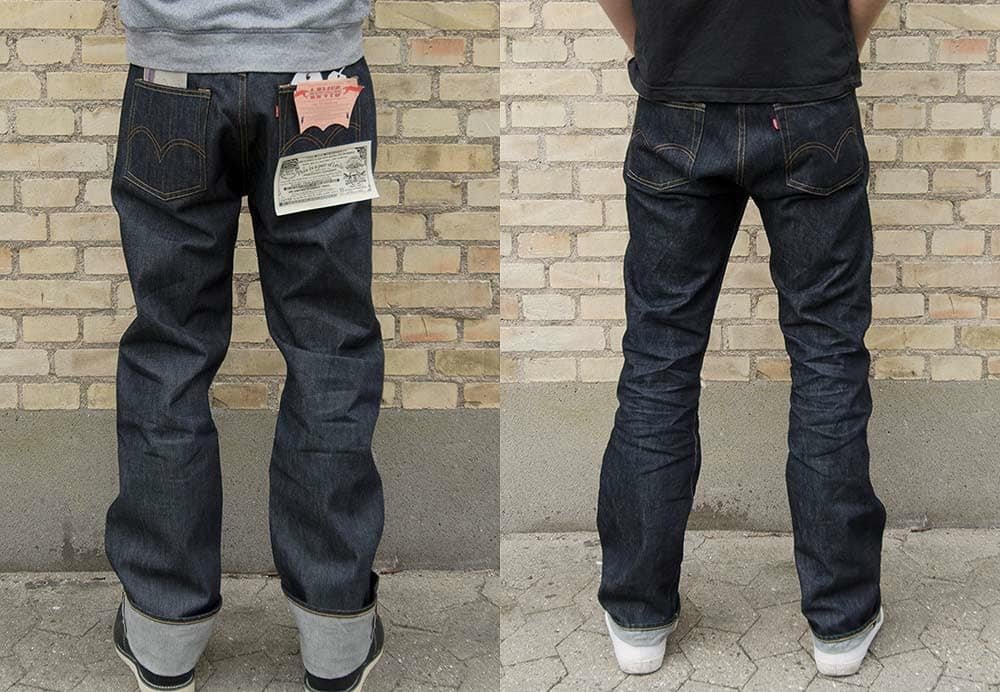
FAQ #7: My Raw Denim Jeans Are Too Big. Can I Shrink Them In the Wash?
As above, yes, but not as much as you might want them to.
Exposing your denim to heat can cause them to shrink, but not enough to turn a loose-fitting pair into a perfect, snug fit. And it depends on the denim.
If you’ve got a pair of unsanforized (aka ‘shrink to fit’) jeans, they’ll probably shrink at least a full tag size (4-5% in the waist, after you’ve stretched them out again, and as much as 8-9% in length).
Pay particularly close attention to the manufacturer’s or retailer’s suggestions. These might not be printed on the tag, so if you’re shopping at a brick and mortar store, ask how much shrinkage you should expect.
If your raw denim is sanforized (and most of it is), shrinkage will be minimal. This means the jeans you’ve got are the ones you’re stuck with. Use the two-finger method. You should be able to slide two fingers into the waistband at the back of your jeans. If you can fit your whole hand in, it’s unlikely that they’ll ever fit you right.
If in doubt, return the jeans. If you do anything to them to try and shrink them, you’ll no longer be able to do that.
👉 Need help telling whether your jeans are shrink-to-fit or sanforized? Check this guide to washing raw denim the right way.
Your Denim Education Resource
This article and its companion piece cover some of the more common questions that denim experts encounter, but this is by no means an exhaustive list.
If, after reading this, you still have questions, visit the Denim Encyclopedia. If you still can’t find the answers you’re looking for, reach out to us here. We’re always keen to help new members of this constantly growing community.
Join 11,000+ Denimheads Who Get My Emails
You’ve finished this article—hope you learned something new. How about more like it, delivered to your inbox every Friday?
Hey, it’s Thomas here, founder of Denimhunters. I send weekly emails with buying tips, denim knowledge, and practical style advice for guys who care about what they wear.




I engaged in a lot of physical activities while I was in college, such as hiking and touring. My jeans are fading well after only a year, and I have five pairs of finished jeans.
Unfortunately, my wife threw away each one of them without telling me because she thought they looked like (sorry, resembled) bum jeans.
After working in an office wearing a suit during the week, I can only wear jeans on the weekends. That’s also just going to a cafe or mall.
Now I want to make faded jeans again, a custom made 17oz raw pair of jeans, it’s been 2 years but still looks like new. lol
I have ruined two pairs of vintage 501’s. I was remodelling a house which involved lots of dirty work especially lifting a kitchen floor with ceramic tiles – I should have worn overalls. Firstly the knees wore through then when I got round to washing them I did not fully empty the pockets. I had left a couple of screws in the pocket. Not only were there holes in the pocket but also holes in the jeans themselves – as if I’d taken a couple of bullets.
So two tips:
– if doing really heavy duty down on your knees dirty work don’t wear your favourite pair of jeans – wear pair of overalls; and,
– don’t leave anything in the pockets when you put your jeans in the wash – hard objects like screws, nuts or even small coins can cause damage.
Ian, first of all, I’m really sorry to hear you ruined your vintage 501 jeans 🙁
But thanks for sharing your advice. Actually, emptying your pockets is the first step in the ‘how to hand wash raw denim’ video that you’ll find under FAQ #5 in this guide.